
A sump pump that runs constantly may be responding to sustained water inflow, or it may be unable to shut off or remove water correctly. Continuous running means the motor stays on without stopping, while short cycling means the pump repeatedly starts and stops within brief intervals. Both patterns can increase wear, although the actual risk depends on the pump’s design, duty rating and operating conditions. Flawless Flows Mechanical helps Spruce Grove homeowners determine whether frequent operation is seasonal, mechanical or related to the property’s drainage system.
When Continuous Sump Pump Operation Is Normal
Extended operation can be expected when water enters the sump pit as quickly as the pump removes it. This commonly occurs during heavy rainfall, rapid snowmelt or periods of elevated groundwater.
Expected operation should still produce visible discharge, maintain the water below an unsafe level and occur without unusual noise, electrical odours or repeated breaker trips. Activity should gradually decrease as rainfall, snowmelt or ground saturation subsides. A pump that barely controls the water level may be functioning, but it has little reserve if inflow increases.
Homeowners who need the surrounding plumbing or drainage system assessed can review the mechanical and plumbing services available in Spruce Grove.
Heavy Rainfall And Rapid Snowmelt Conditions
Heavy rainfall can saturate the soil around the foundation and send more water into the perimeter drainage system. Rapid snowmelt creates similar pressure when frozen or saturated soil cannot absorb water quickly.
The pump may operate for long periods while this water enters the sump pit. Activity should become less frequent as the property drains, although clay soil, frost and prolonged ground saturation can delay that change. Continued operation after site conditions improve may indicate a drainage defect, persistent groundwater or discharged water returning toward the foundation.
High Water Table Areas In Spruce Grove
Groundwater conditions can vary between Spruce Grove properties based on elevation, soil, grading and nearby drainage patterns. Some homes may experience seasonal groundwater during spring thaw, while others may receive consistent inflow throughout much of the year.
Frequent operation may be expected when groundwater remains near the foundation drainage system. However, a pump that operates at nearly full capacity has limited protection against a sudden increase in water. The system should be assessed to confirm that the pump capacity, discharge route and backup protection match the conditions affecting the individual property.
Mechanical Issues That Cause Constant Cycling
A mechanical problem can prevent the pump from responding correctly as the water level changes. A pump that continues running after the pit empties usually has a shutoff or float problem. Short cycling more often involves backflow, a restricted float range or a pit that is too small for the pump’s output.
A clogged intake, damaged impeller, worn motor or trapped air can also allow the pump to run without moving enough water. These faults may resemble a discharge blockage because the water level remains high while little water leaves the system.
Float Switch Stuck Or Misaligned
The float switch activates the pump when water rises and shuts it off after the pit drains. The float can become caught against the pit wall, discharge pipe, power cord or accumulated debris. It may also be installed with too little space to move through its full range.
A float that remains raised can keep the motor running after the water has been removed. The float may also move normally while the internal switch remains electrically closed, which usually requires switch or pump replacement.
The pump should be disconnected from power before any safely accessible obstruction is removed. Homeowners should not reach into a wet pit or handle electrical equipment when water is near the outlet, plug or damaged wiring.
Pump Size Mismatch Or Overworking
An undersized pump may run continuously because its delivered flow is equal to or lower than the rate of incoming water. The pit may remain near the same level even though water is leaving through the discharge line.
An oversized pump can empty a small pit rapidly and restart moments later as water returns. This short cycling can place unnecessary stress on the switch and motor.
Horsepower alone does not determine suitable capacity. Actual performance depends on the pump’s flow at the required vertical lift, discharge length, pipe diameter and resistance created by fittings or valves. Acceptable runtime also depends on whether the pump is rated for continuous or intermittent duty.
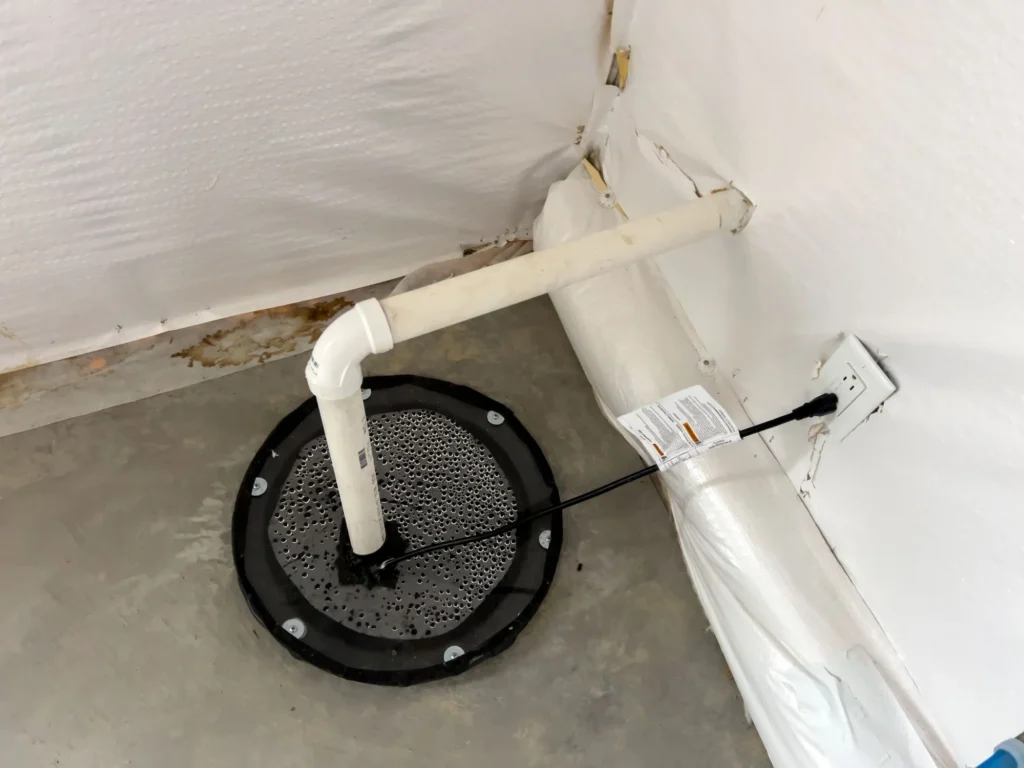
Drainage Problems That Keep Your Pump Running
A sump pump may be operating correctly while managing water that should have been directed away from the home. In this situation, replacing the pump will not correct the source of the excessive inflow.
Drainage should be investigated when pump activity increases after landscaping or grading changes, continues during otherwise dry conditions or repeatedly resumes immediately after the pump shuts off.
Poor Exterior Drainage Around The Foundation
Soil that slopes toward the home can direct rainwater and snowmelt against the foundation. Short downspouts, overflowing eavestroughs and settled areas beside the building can create the same problem.
This surface water may enter the foundation drainage system and increase the amount reaching the sump pit. Correcting grading and roof drainage can reduce avoidable inflow, but it will not eliminate water caused by a naturally elevated water table.
Any drainage adjustment must direct water away without creating unsafe ice, erosion or drainage onto neighbouring property. Site conditions and applicable local requirements should be considered before changing the discharge route or grading.
Discharge Line Blockages Or Recirculation
A restricted discharge line limits how quickly the pump can remove water. Ice, debris, crushed piping, closed valves or a malfunctioning check valve can reduce or stop exterior flow. A clogged intake, damaged impeller or air lock can produce similar symptoms and should not be mistaken automatically for a pipe blockage.
Weak or absent water flow at the exterior outlet suggests a restriction or pump performance problem. Water that returns to the pit immediately after shutoff more commonly indicates a failed check valve or backflow from the discharge pipe.
Recirculation can also occur when the outlet releases water too close to the foundation. The discharged water drains back toward the home, re-enters the foundation drainage system and returns to the pit. A pump should not continue operating against a confirmed frozen, closed or fully blocked line because it cannot remove the incoming water.
Signs Your Sump Pump Is At Risk Of Failure
Constant operation alone does not confirm that a sump pump is about to fail. Failure risk also depends on the pump’s age, duty rating, operating history, discharge performance and ability to control the water level.
Immediate attention is required when the pit is approaching overflow, the water continues rising while the pump runs or little water reaches the discharge outlet. Smoke, sparking, damaged wiring, a burning electrical smell or repeated breaker trips also indicate an urgent electrical risk. The breaker should not be repeatedly reset before the pump and circuit are assessed.
Grinding, rattling, excessive vibration, reduced flow or intermittent thermal shutdown may indicate developing wear rather than an immediate flood. These symptoms still justify a scheduled inspection before the next period of heavy inflow.
A sump pump repair assessment can determine whether the issue is caused by the float switch, check valve, discharge system or the pump itself.
How To Reduce Constant Sump Pump Activity
The correct action depends on whether the system is receiving unnecessary water, returning discharged water or failing to move water at the required rate.
- Confirm that the float can move without contacting the pit wall, piping or power cord.
- Remove only visible debris that can be reached safely without handling submerged electrical equipment.
- Check that the exterior discharge outlet is open and free from ice, soil or vegetation.
- Extend downspouts and correct surface grading where water is being directed toward the foundation.
- Have the check valve inspected when water returns immediately after each cycle.
- Arrange a capacity assessment when the pump cannot lower the water level during predictable seasonal conditions.
- Consider a secondary pump or battery backup when the home depends on frequent pumping or is vulnerable during a power outage.
Grading and downspout corrections reduce the amount of water entering the system. Pump, check-valve and discharge improvements increase the system’s ability to manage that water. The correction must match the diagnosed cause.
Sump Pump Repair And Replacement Services In Spruce Grove
Repair may be appropriate when continuous operation is caused by an accessible float obstruction, replaceable switch, failed check valve, air lock or correctable discharge restriction. Replacement may be more practical when the motor or impeller is damaged, corrosion is extensive, replacement parts are unavailable or repair costs approach the cost of a properly selected new pump.
Pump age and repair history also affect the decision. A unit that has required repeated service or no longer provides reliable flow may not justify another isolated repair. Overheating alone does not automatically require replacement because a stuck switch or blocked discharge can make an otherwise functional pump run excessively. Replacement becomes more likely when heat has damaged the pump or continues after the underlying problem is corrected.
A working pump that consistently lacks capacity may need to be replaced with a correctly sized unit. Properties with unusually high or variable inflow may be better served by a secondary pump or backup system rather than relying on one larger pump.
Flawless Flows Mechanical provides sump pump installation and replacement in Spruce Grove based on the pit configuration, discharge requirements and water conditions affecting the home.