
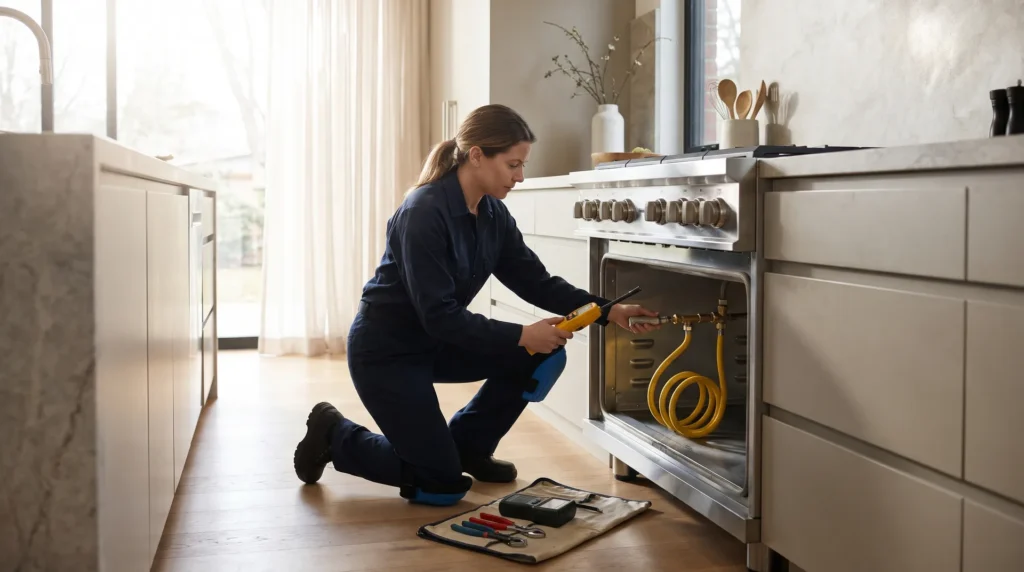
Detecting a sulfur or rotten egg odor inside a residential or commercial property is one of the most urgent emergencies a property owner can face. Because natural gas is primarily methane and is naturally colorless, tasteless, and odorless, utility providers add sulfur-based odorants like mercaptan. This safety measure is designed so that a person with a normal sense of smell can detect a leak well before gas reaches an explosive concentration in the air. Taking immediate, appropriate action helps protect both occupants and property.
While a strong, persistent odor or hissing sound demands immediate evacuation and a call to emergency services, many indoor sulfur odors trace back to localized downstream issues. These can include an extinguished pilot light, minor appliance valve seepage, failed flex connectors, or even sewer gas escaping through a dried-out plumbing floor drain trap. This guide explains how to identify the source of a gas odor, when to evacuate, and the exact steps to safely handle the situation.
What Constitutes a Gas Leak Emergency?
A gas leak emergency occurs when uncombusted natural gas escapes into a living or working environment, creating a fire, explosion, or asphyxiation hazard. Research from the National Fire Protection Association (NFPA) shows that structure fires ignited by flammable gases most commonly involve cooking appliances and heating equipment, underscoring why prompt leak detection and safe response procedures matter.
Understanding the specific characteristics of different leaks helps determine the urgency of the response.
Main or Branch Gas Line Leaks
A main or branch line leak is a high-urgency emergency requiring immediate evacuation.
-
Characteristics: A strong, pervasive, or rapidly intensifying skunk or rotten egg smell present in hallways, utility rooms, or throughout the building.
-
Audible and Visual Clues: A distinct hissing, whistling, or blowing sound near black iron piping, corrugated stainless steel tubing (CSST), or the outdoor meter set. Outdoors, you might see dead or yellowing vegetation over buried lines, bubbling water in puddles, or dirt blowing into the air.
-
Common Causes: Corroded threaded pipe joints, damaged flexible appliance connectors, unpermitted renovations, settling foundations, or excavation strikes.
Appliance-Specific Seepage
Sometimes the issue is isolated to a specific piece of equipment.
-
Characteristics: A very faint, localized gas odor detected only when standing directly next to a single gas-fired appliance, with no hissing sound.
-
Common Causes: Extinguished standing pilot lights on older water heaters or furnaces, partially open stove knobs, ignition delays in short-cycling HVAC equipment, or aging flexible supply lines.
In Alberta homes, a faint sulfur odor isolated directly beside a furnace, water heater, or stove often points to an extinguished pilot light or minor appliance valve seepage, though it still requires careful attention. Conversely, a strong rotten-egg smell across multiple rooms or accompanied by a hissing sound indicates a larger or pressurized gas leak requiring immediate evacuation and a call to ATCO Gas at 1-800-511-3447 or 911.
The Sewer Gas False Alarm
Not every rotten-egg smell in a basement is a natural gas leak. Homeowners frequently confuse natural gas with hydrogen sulfide, a toxic component of sewer gas.
-
How They Differ: Both mercaptan and hydrogen sulfide produce a pungent sulfur odor. However, natural gas is lighter than air and rises to ceilings and upper floors. Hydrogen sulfide is heavier than air and hugs the floor.
-
The Cause: In dry winter months, water in basement floor drain P-traps can evaporate. These dry traps allow hydrogen sulfide to enter mechanical rooms, often right next to the furnace and hot water tank.
Although hydrogen sulfide has a strong odor at low levels, high concentrations or prolonged exposure can dull the human sense of smell, causing the odor to seem to fade even when the gas is still present. If refilling a dry drain trap does not stop the odor, a professional plumbing inspection can identify issues such as cracked vent stacks, blocked roof vents, or damaged drain lines.
Step-by-Step Emergency Evacuation and Shutdown Procedures
If you detect a strong gas odor, hear a hissing sound, or are uncertain of the source, you must follow strict non-ignition evacuation protocols.
1. Evacuate Immediately
Get everyone, including pets, out of the building immediately. Leave doors open as you exit if they are directly in your path, but do not linger to open windows to air out the space.
2. Eliminate All Electrical and Spark Triggers
Do not touch anything that could generate a spark. This means you must:
-
Not flip any light switches on or off, as operating a switch can create a small internal electrical spark.
-
Not use a cell phone, landline, garage door opener, doorbell, or flashlight inside the home.
-
Not unplug or plug in appliances, adjust thermostats, or use elevators.
-
Not light matches, lighters, or candles, and do not start motor vehicles parked near the building.
3. Call for Help from a Safe Distance
Once safely away from the property, such as at a neighbor’s home or across the street, call 911 or your local utility provider’s emergency response line.
4. Understand When to Use Shutoff Valves
Utility providers emphasize a critical rule: Do not attempt to shut off the main gas meter if doing so puts you in a hazardous zone or delays evacuation. Furthermore, never turn the main gas meter valve back on yourself once it has been shut off.
-
Appliance Shutoff Valves: Most code-compliant gas appliances have a dedicated manual quarter-turn shutoff valve on the supply pipe near the unit. When the handle is parallel to the pipe, gas is flowing. Rotating the handle 90 degrees so it is perpendicular stops the gas flow to that appliance. If a standing pilot light goes out, turn the appliance control knob to OFF and wait at least 5 minutes for residual gas to dissipate before following the manufacturer’s instructions to relight it.
-
Main Service Shutoff: Located on the inlet pipe next to the exterior meter. Opening a closed main meter valve without properly purging and checking all downstream appliances can push unburned gas through open pilot orifices. Only a certified professional may restore service.
Utility vs. Certified Gasfitter Responsibilities
A major point of confusion for property owners during a gas emergency is knowing who fixes what.
The gas utility, such as ATCO Gas in Alberta, is responsible for the street main, underground service line, gas regulator, and the gas meter set. They respond 24 hours a day to make the site safe by shutting off or locking the meter. However, the utility does not repair customer-owned downstream piping or appliances.
All piping, tubing, valves, vents, and appliances downstream of the gas meter outlet are the responsibility of the property owner. A certified gasfitter is required to diagnose the issue, perform the repairs, conduct pressure tests, and ensure the system complies with CSA B149.1 gas installation standards.
Gas Line Installation in Spruce Grove
Gas line installation in Spruce Grove requires a municipal gas permit and a certified gasfitter to ensure proper sizing, safe pressure testing, and compliance with the Alberta Safety Codes Act. Under City of Spruce Grove safety codes bylaws, permits are required before installing, altering, or adding to a gas system, including adding a BBQ line, a garage heater, or a tankless water heater.
Proper installation requires calculating the total BTU connected load, pipe length, fitting resistance, and allowable pressure drop. This ensures that existing supply lines and the utility meter have enough capacity so appliances are not starved of fuel when multiple units run at the same time.
While ATCO Gas responds to shut off the meter and make a leaking property safe, they do not install or repair downstream pipes. Any gas line installation, alteration, or leak repair in Spruce Grove requires an authorized contractor. Flawless Flows Mechanical provides licensed, code-compliant residential, commercial, and industrial gas line installation, load calculation, and modification services across the region.
24/7 Emergency Plumber in Spruce Grove
Finding a reliable 24/7 emergency plumber in Spruce Grove is critical when facing urgent after-hours threats like suspected gas leaks, broken main water pipes, or toxic sewer line backups. Mechanical systems do not fail on a schedule, and winter emergencies such as no-heat situations or frozen pipes require an immediate response to prevent catastrophic property damage.
While a homeowner can safely refill a dry floor drain P-trap with water or turn off an accessible appliance shutoff valve, the Alberta Safety Codes Act prohibits uncertified gas work. Do-it-yourself attempts on gas lines, main water lines, or sewer backups carry serious risks, including gas leaks, carbon monoxide hazards, property damage, and potential complications with home insurance coverage.
Whether a property owner needs gas leak detection, urgent water line repair, or help with a sewer backup, calling a qualified professional is the safest option. Flawless Flows Mechanical operates as a 24-hour mechanical contractor, providing after-hours emergency plumbing, heating, and gas fitting services 7 days a week. Their certified technicians diagnose complex issues, perform safety pressure tests, and restore essential services for residential and commercial properties.
Frequently Asked Questions
Why does my basement smell like rotten eggs if there is no gas leak?
If you smell rotten eggs but your gas utility has ruled out a natural gas leak, the source is often sewer gas containing hydrogen sulfide. Dry floor drain P-traps, blocked plumbing roof vents, or cracked vent stacks can allow sewer gases to enter a basement or mechanical room. If a dry trap is the cause, pouring water into the floor drain restores the water seal; if the odor returns, a plumber should inspect the drain and venting system.
How much gas in the air is needed to cause an explosion?
Natural gas (methane) is explosive in air at concentrations between roughly 5% (the Lower Explosive Limit) and 15% (the Upper Explosive Limit). The sulfur odorants added to distributed natural gas are designed so a person with a normal sense of smell can detect a leak at around 1% gas-in-air, providing a safety margin to evacuate before explosive concentrations are reached.
Can I turn my main gas meter back on after an emergency?
You must never turn the main gas meter valve back on yourself. Opening the main valve without properly purging the lines and checking all downstream appliances can push unburned gas into the building or create unsafe pressure conditions. Only your utility provider or a certified gasfitter is permitted to restore gas service and relight appliances.